Die verblüffende Welt der Farben
Schwarz ist nicht gleich Schwarz und die Herkunft bestimmter Namen für Farbtöne ist spannender als so mancher Roman. Tauchen Sie mit uns ein in die faszinierende Welt der Farben und ihrer Herkunft. Wir sind uns sicher: Sie werden verblüfft sein.
Marrs Green
Die schönste Farbe der Welt
2017 startete der britische Papierhersteller GF Smith zusammen mit der Stadt Hull und der Designagentur „Made Thought“ eine Umfrage, um herauszufinden, welche die schönste Farbe der Welt ist.
Allgemein bekannt war, dass bestimmte Farbtöne eher positive oder negative Assoziationen auslösen, so lag Blau beispielsweise international an erster Stelle und Farben wie Braun eher am unteren Ende des Rankings.
Um sich nun Gewissheit zu verschaffen und ein breiteres Spektrum abzudecken, wurden über 30.000 Leute aus 100 Ländern nach ihrer Meinung zur schönsten Farbe gefragt und durften aus einem umfangreichen Katalog wählen.
Siegreich ging aus diesem Experiment die Farbe Marrs Green hervor, welche danach prompt von GF Smith in ihr festes Sortiment an Farben aufgenommen wurde.
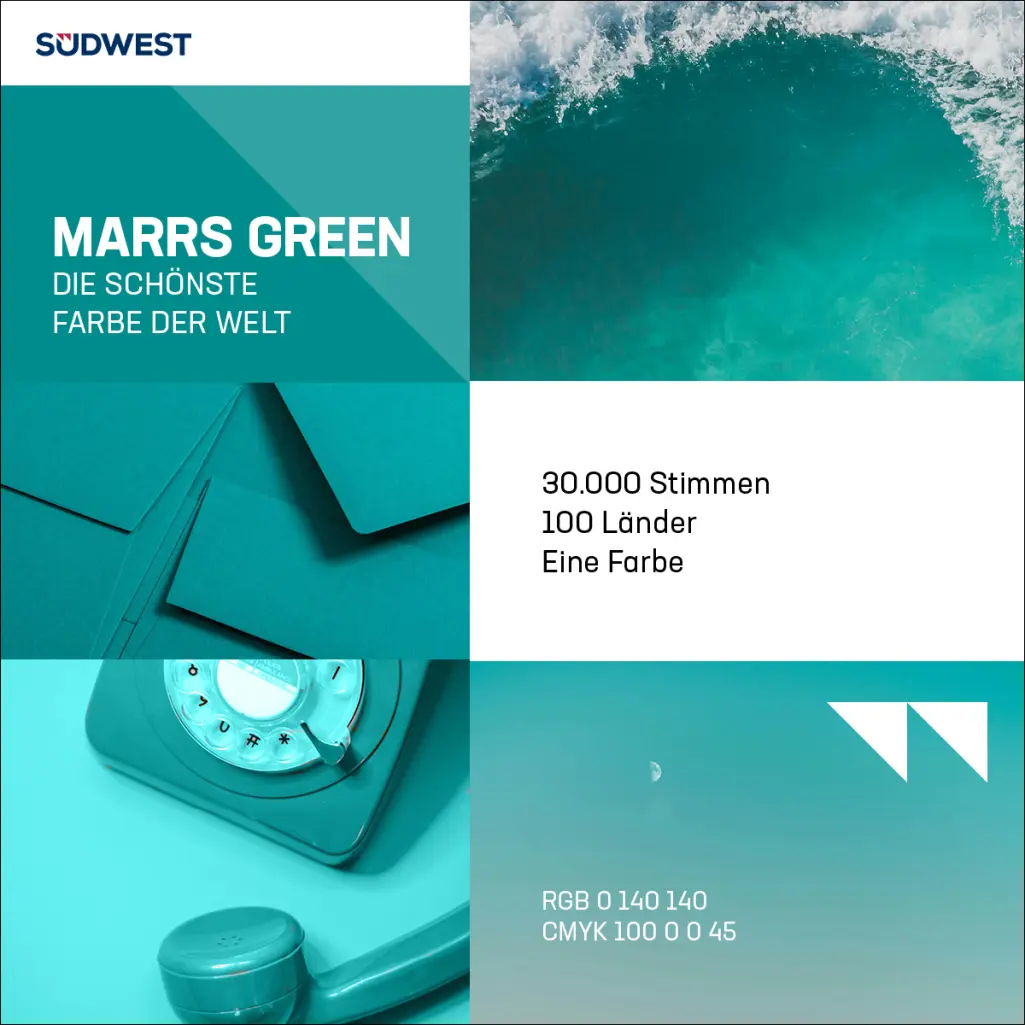
Fun Fact: Die Farbe wurde nach ihrer Erfinderin, der Designerin Annie Marrs benannt.
Pantone 448C
Die hässlichste Farbe der Welt?
Die Geschichte der Farbe beginnt in Australien, als die dortige Regierung das Forschungsinstitut GFK damit beauftragt, die hässlichste und abstoßendste Farbe der Welt zu finden. Das Institut befragt daraufhin ca. 1000 Menschen bezüglich ihrer Assoziationen mit bestimmten Farbtönen, positiv wie negativ.
Dabei stellt sich heraus, dass Pantone 448c auch „Opaque Couché“ genannt, fast ausschließlich negative Assoziationen wie Dreck, Teer oder Tod hervorruft. Zunächst wurde der Farbton vom australischen Gesundheitsminister als „olivgrün“ bezeichnet, woraufhin aber die Australian Olive Association intervenierte, um nicht mit dem Farbton in Verbindung gebracht zu werden.
Auf Basis des Umfrageergebnisses beschließt die Regierung 2012 ein Gesetz zur Vereinheitlichung von Zigarettenverpackungen in der Farbe Pantone 448c, um einen Rückgang im Zigarettenkonsum der Bevölkerung zu bewirken.
Nach der Einführung sank der Pro-Kopf Konsum tatsächlich um 5%. Im Jahre 2016 folgten dann Länder wie Kanada, Frankreich, UK, Irland, Israel, Norwegen, Neuseeland, Slowenien, Saudi-Arabien, Uruguay, Thailand, Singapur, Türkei, Belgien und die Niederlande dem Beispiel Australiens.
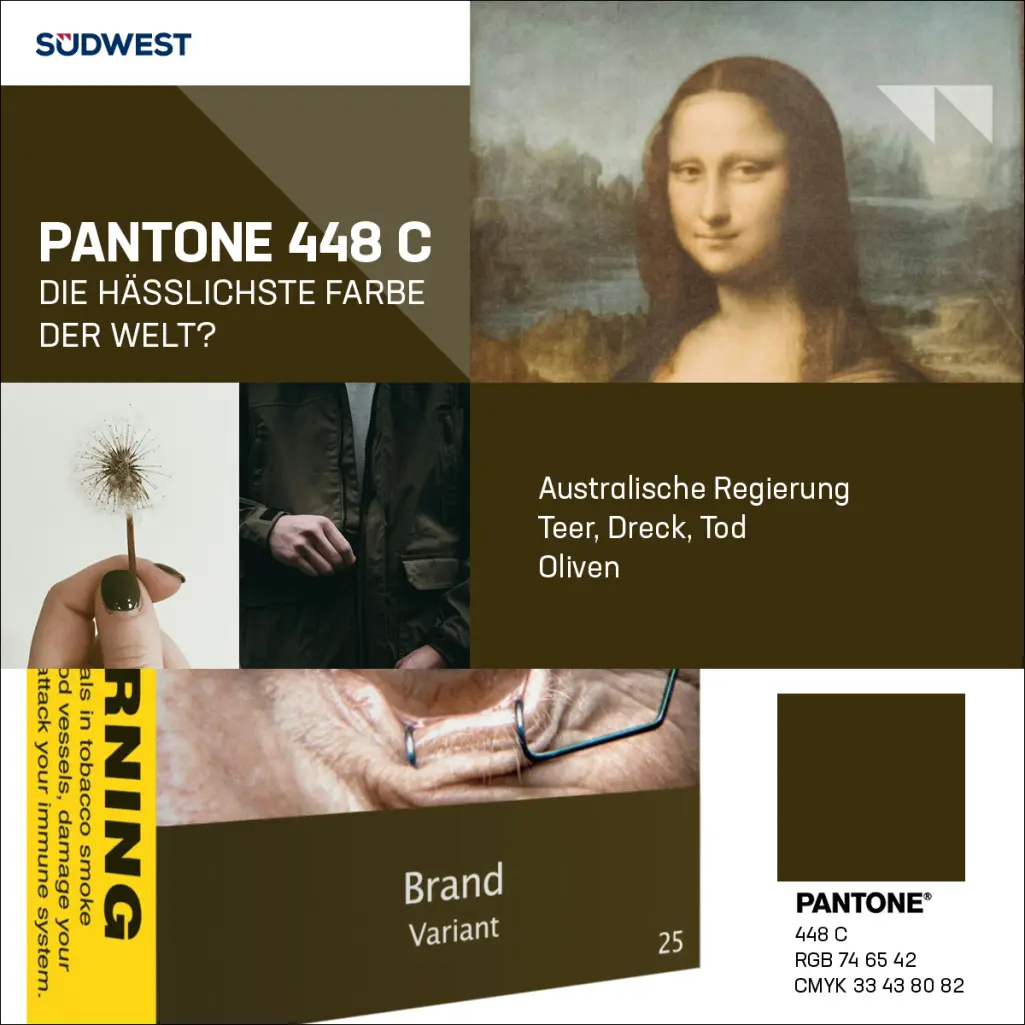
Fun Fact: Abgesehen von ihrer Verwendung zur Abschreckung findet Pantone in vielen anderen Bereichen wie Mode, Kunst, Möbeln oder Kosmetik Verwendung und ist sogar in Leonardo da Vincis Mona Lisa wiederzufinden.
Vantablack
Das schwärzeste Schwarz
Das schwärzeste Schwarz wurde von Surrey NanoSystems entwickelt und ist weniger eine Farbe oder Pigment, vielmehr ist es eine Substanz aus Kohlenstoffnanoröhrchen, die sich auf einer Oberfläche so anordnen, dass sie 99,96 % des einfallenden Lichts absorbieren, jede Kontur des jeweiligen Objekts dadurch verschwinden und es dadurch zweidimensional erscheinen lassen. Der Name Vanta bedeutet Vertically Aligned Nanotube Array.
Ursprünglich entwickelt wurde das Material für die Bereiche Raumfahrt, Messtechnik und Militärwesen, um beispielsweise Streulicht in Teleskopen zu verringern. Allerdings fand es seine populärste Anwendung in der Kunst, da sich der Künstler Anish Kapoor die Exklusivrechte an der Farbe sicherte, was einen Aufschrei in der Kunstwelt und einen andauernden Streit mit dem Künstlerkollegen Stuart Semple zur Folge hatte. Dieser war der Überzeugung, dass Farbe jedem zugänglich gemacht werden sollte und entwickelte deswegen einen eigenen Schwarzton, ähnlich dem Vanta Black, den er allen frei verkäuflich anbot, außer Anish Kapoor.
Doch nicht nur die Kunstwelt nutzte das Material, so hat beispielsweise BMW auf der IAA 2019 einen Wagen gezeigt, welcher komplett in das Material gekleidet war.
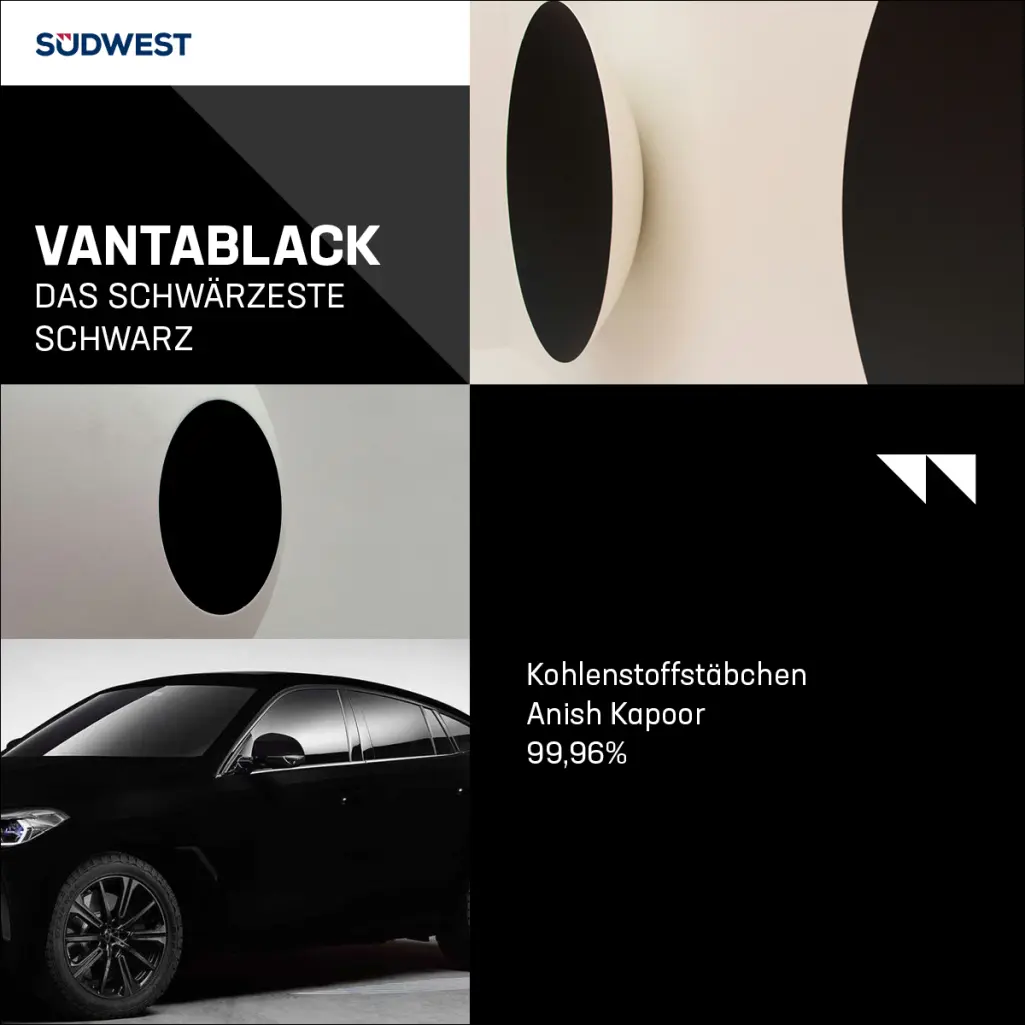
Fun Fact: Den Weltrekord als „dunkelste menschengemachte Substanz“ hielt Vanta Black nur bis 2015 als es von dem Material Dark Chameleon Dimers abgelöst wurde, welches 99,995 % des Lichtes absorbiert.
Flamingo Rosa
Du bist, was du isst
Flamingos sind bekannt für ihre auffällige rosa bis rote Färbung, die sie zu einem der markantesten Vögel macht. Diese ungewöhnliche Farbe hat ihren Ursprung hauptsächlich in ihrer Ernährung, insbesondere in Carotinoiden, die in den Nahrungsquellen der Flamingos reichlich vorhanden sind.
Flamingos ernähren sich von Algen, kleinen Krustentieren wie Salinenkrebsen und Plankton, die alle reich an Carotinoiden sind. Carotinoide sind Pigmente, die in vielen Pflanzen und Organismen vorkommen und für gelbe, orange und rote Farben verantwortlich sind. Wenn Flamingos diese Nahrung zu sich nehmen, werden die Carotinoide im Verdauungssystem des Vogels abgebaut und über den Blutkreislauf zu den Federn, Haut und Schnabel transportiert. Hier werden die Pigmente eingelagert und verleihen dem Flamingo seine charakteristische Färbung.
Die intensive Färbung dient nicht nur ästhetischen Zwecken, sondern spielt auch eine Rolle im Sozialverhalten der Flamingos. Helle, kräftige Farben signalisieren Gesundheit und Vitalität, was bei der Partnerwahl von Bedeutung ist. Männchen und Weibchen mit intensiverer Färbung haben tendenziell mehr Erfolg bei der Paarung, da sie als gesünder und stärker wahrgenommen werden.
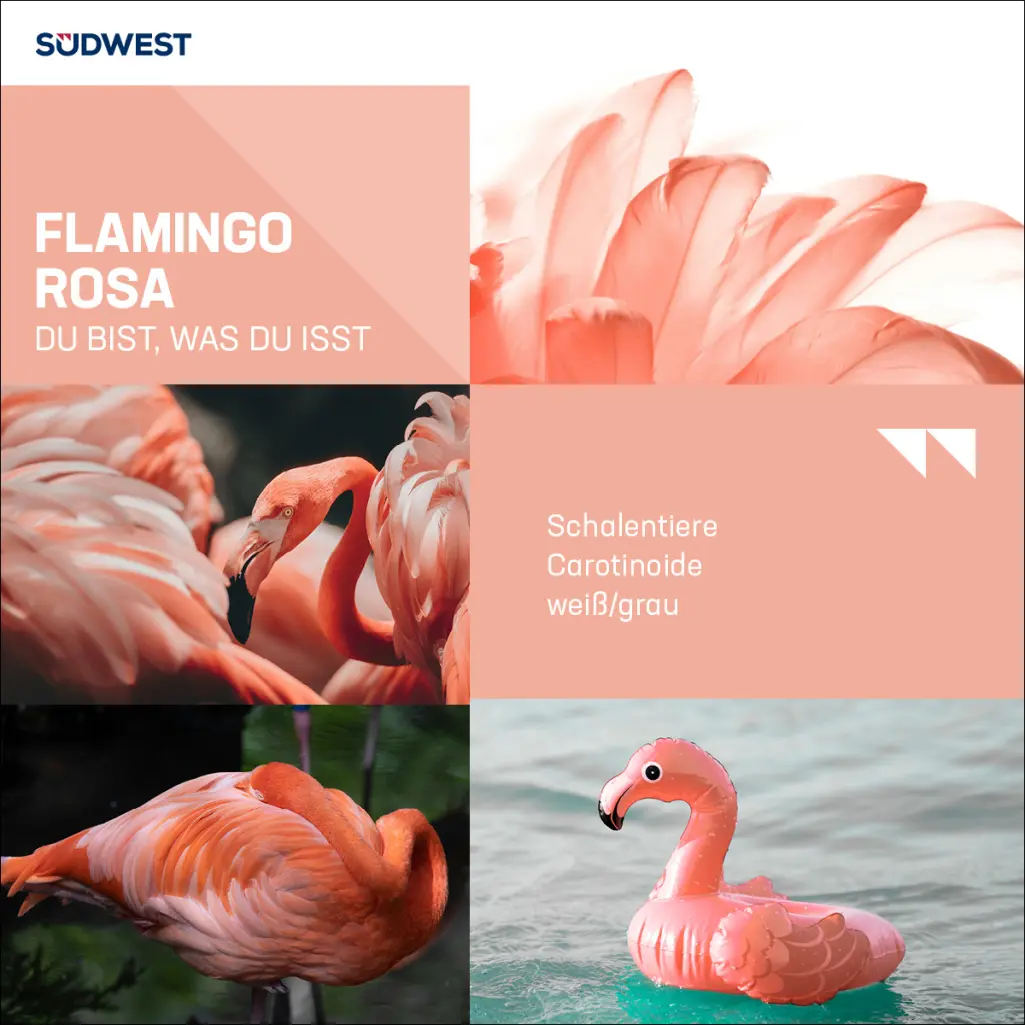
Fun Fact: Flamingo-Küken sind bei der Geburt grau oder weiß und entwickeln erst nach und nach ihre rosa Färbung, wenn sie beginnen, die gleiche Nahrung wie die erwachsenen Vögel aufzunehmen. Ohne eine ausreichende Zufuhr an Carotinoiden würden Flamingos ihre leuchtende Farbe verlieren und eher blass oder weiß erscheinen.
British Racing Green
Die Geschichte des British Racing Green beginnt mit dem autobegeisterten Zeitungsverleger James Gordon Bennett. Dieser ruft von 1900 bis 1905 den Gordon Bennett Cup ins Leben, bei dem sich Nationen wie Frankreich, Deutschland, Großbritannien, Österreich, Belgien und die Schweiz mit jeweils drei Autos auf einer Strecke von bis zu 650 km messen konnten. Regel war es, dass der Sieger des Vorjahres den Cup im eigenen Land ausrichten musste. Anfangs waren nahezu alle Wagen grau und deswegen schwer zu unterscheiden.
Also suchte man sich nach und nach Landesfarben, Mercedes beispielsweise weiß, dann später Silber und die Amerikaner zunächst rot und dann blau/weiß.
Als die Briten 1902 siegten, standen sie in der Pflicht den Cup 1903 im eigenen Land stattfinden zu lassen. Diese Tatsache stellte sie jedoch vor ein Problem, denn zur damaligen Zeit galt in ganz Großbritannien eine gesetzliche Höchstgeschwindigkeit von 12 Meilen (20 km) pro Stunde und Autorennen waren praktisch illegal.
Um diesen Umstand zu umgehen, wechselte man den Austragungsort nach Irland und lackierte die eigenen Wagen deswegen als Dank an „die grüne Insel“ in einem dunkelgrün.
Doch wie genau British Racing Green aussieht lässt sich nicht sagen, da über die Jahrzehnte, ob in der Formel 1 oder bei den 24-Stunden-Rennen in Le Mans, viele britische Rennteams wie Jaguar, Bentley oder Lotus unterschiedliche Smaragd- oder Grüntöne verwendet haben und der Begriff auch bis heute nicht geschützt ist.

Fun Fact: Der Gordon Bennett Cup legte den Grundstein der Grand-Prix-Rennen, wie wir sie heute aus der Formel 1 kennen und ebenfalls für die Gründung der FIA (Fédération Internationale de l’Automobile).
Panzertape
Einfach mal die Klappe (zu)halten
Die Entstehung des Duct Tape, auch bekannt als „Panzertape“ oder „Gaffer Tape“, geht auf die 1940er Jahre zurück. Während des Zweiten Weltkriegs wurde von der Johnson & Johnson-Tochterfirma Permacel entwickelt, um ein dringendes Problem des Militärs zu lösen: die Notwendigkeit eines wasserfesten, starken und vielseitigen Klebebands zur Versiegelung und Schutz der Munitionskisten.
Die Lösung kam von einer Arbeiterin namens Vesta Stoudt, die bei der Verpackung von Munitionskisten in einer Fabrik in Illinois arbeitete. Sie bemerkte, dass die bisherigen Verschlüsse unpraktisch waren, und schlug ein neues, einfaches Verschlusssystem vor, das auf einem speziellen Klebeband basierte. Stoudt schrieb an Präsident Franklin D. Roosevelt und beschrieb ihr Konzept. Ihre Idee fand Gehör und wurde an das War Production Board weitergeleitet, welches Johnson & Johnson mit der Entwicklung beauftragte.
Das Ergebnis war ein dreischichtiges Klebeband, bestehend aus einem robusten Gewebeträger, einer Polyethylenbeschichtung und einem starken Klebstoff. Diese Kombination machte das Band haltbar, wasserfest und flexibel. Der Name Duct Tape etablierte sich erst nach dem Krieg, als das Band zunehmend für das Verbinden von Lüftungsrohren (ducts) verwendet wurde. Seine Farbgebung geht ebenfalls auf diese Verwendung zurück, da man versuchte die Farbe des Tapes, der Farbe der Rohre anzupassen.
Nach dem Krieg fand Duct Tape rasch seinen Weg in den zivilen Gebrauch. Seine Vielseitigkeit und Zuverlässigkeit machten es in zahlreichen Anwendungen beliebt, von Reparaturen im Haushalt bis hin zu Notfalllösungen im Handwerk und auf Baustellen.

Fun Fact: Das Band wurde zunächst als „Duck Tape“ bezeichnet, da es wasserabweisend wie die Federn einer Ente war. Ebenfalls war ein Stück Tape Teil eines Kunstwerks von Maurizio Cattelan namens „Comedian“, welches 2019 auf der Art Basel in Miami für 120.000 $ verkauft wurde und aus einer Banane bestand, welche mit dem Streifen Tape an die Wand geklebt wurde.
Luminova
Ein leuchtendes Beispiel
Luminova ist ein nachtleuchtendes Pigment auf Basis von Erdalkalialuminaten, welches 1998 von der japanischen Firma Nemoto & Co Ltd. entwickelt wurde. Die Substanz speichert eingetragenes, natürliches oder künstliches Licht und gibt dieses über einen längeren Zeitraum wieder ab. Das Leuchten entsteht durch anorganische Phosphoreszenz, bei der durch den Lichteintrag Elektronen auf ein höheres Energieniveau gesetzt werden und bei der Zurücksetzung ein Leuchten entsteht.
Das Material ist unbegrenzt wiederaufladbar und findet hauptsächlich in der Herstellung leuchtender Zeiger in Armbanduhren Verwendung. Leuchtende Zeiger sind jedoch kein neues Phänomen, da bereits vor dem ersten Weltkrieg Materialien entwickelt wurden, welche mithilfe der radioaktiven Isotope Radium und Tritium leuchteten. Diese hatten im Gegensatz zu Luminova allerdings eine Halbwertszeit, nach 12,3 Jahren war die Hälfte des Materials zerfallen.
Radium und Tritium sind innerhalb des Gehäuses zwar ungefährlich und wurden noch lange verwendet, 1998 allerdings größtenteils durch Luminova und später Superluminova abgelöst, da dieses nicht radioaktiv ist, beinahe jedem Umwelteinfluss standhält und unbegrenzt wiederaufladbar ist.
Abgesehen von Armbanduhren findet Luminova auch in anderen Artikeln wie leuchtenden Farben oder Schildern Verwendung, um beispielsweise Notausgänge im Dunkeln zu kennzeichnen.
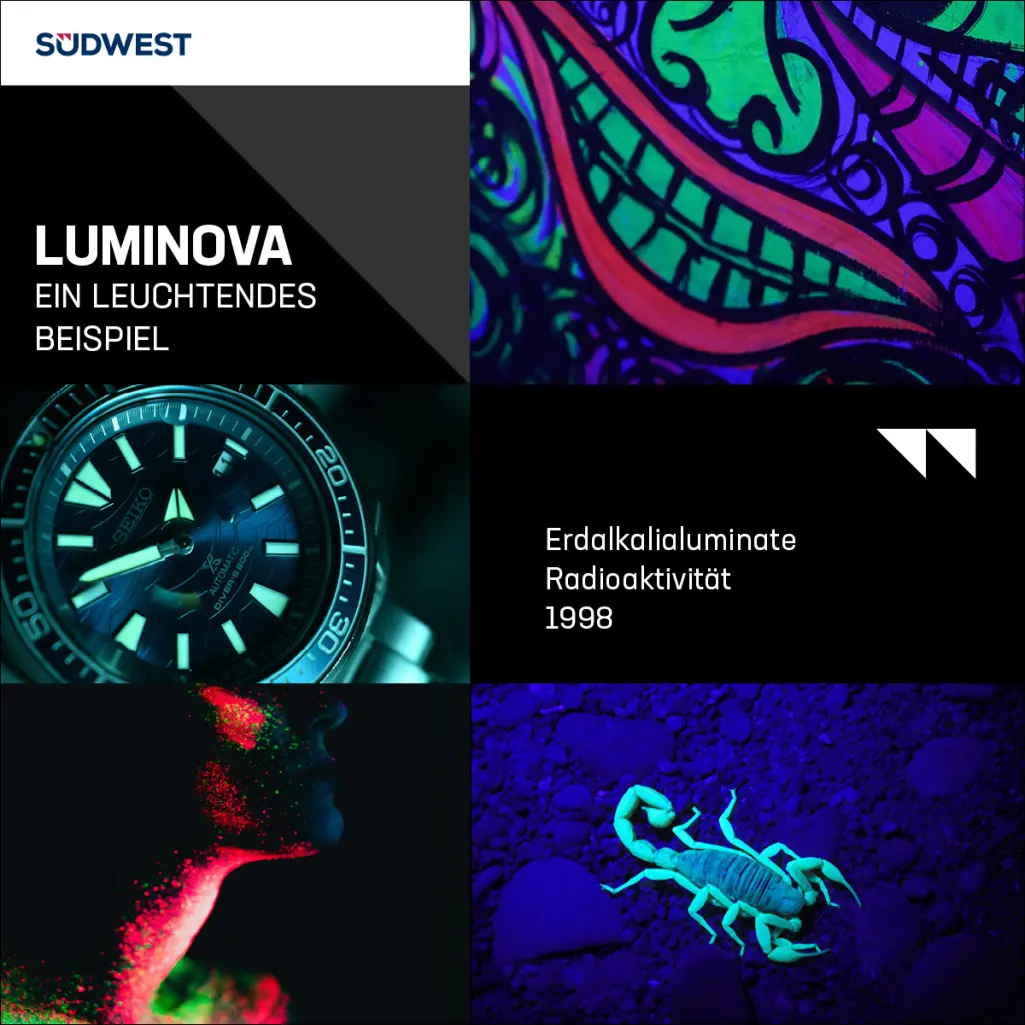
Fun Fact: Auch im Tierreich gibt es Fluoreszenz und Lumineszenz, so enthält die Panzerung einiger Skorpione beispielsweise den Stoff Beta-Carbolin, ein fluoreszierendes Molekül, welches bei UV-Strahlung (z.B. Mondlicht) sanft leuchtet.
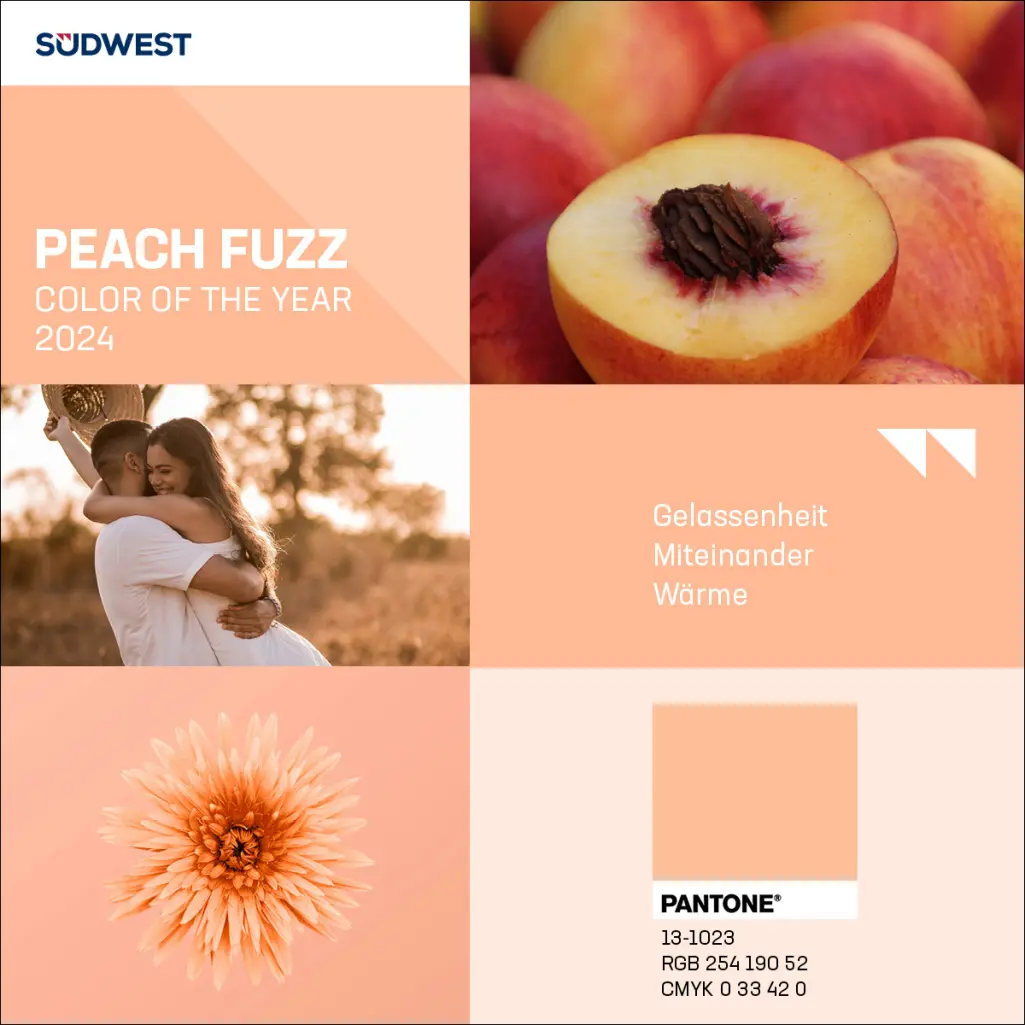
Peach Fuzz
Color of the Year 2024
Die Pantone Color of the Year 2024 ist „Peach Fuzz“, ein sanfter und warmer Pfirsichton, der ein Gefühl von Ruhe, Wohlbefinden und Geborgenheit vermitteln soll.
Die Wahl dieser Farbe spiegelt Trends im Design und der Gesellschaft wider, die in Richtung eines Bedürfnisses nach Harmonie, Entschleunigung und Wohlbefinden entwickeln.
Die Farbe beschreibt zwischenmenschliche Gefühle, wie das Umarmen eines geliebten Menschen oder mit Freunden eine gute Zeit zu verbringen. In einer Zeit, in der jeder an seinen externen Errungenschaften gemessen wird, soll „Peach Fuzz“ einen Wechsel der Prioritäten hin zu innerem Wohlbefinden symbolisieren.
Eingesetzt wird die Farbe in vielen Bereichen wie Mode, Produktdesign, Innenarchitektur und Branding. Dabei steht die Farbe entweder allein oder in Kombination mit anderen Tönen für das ihr zugeordnete Gefühl und ist ein Symbol für Frieden, Wärme und Gelassenheit in einer schnelllebigen Welt.
Fun Fact: Im Jahr 2012 wurde die Farbe des Jahres, Tangerine Tango, in Partnerschaft mit Sephora für eine Make-up-Linie verwendet.
Kosmisch Latte
Es steht in den Sternen
Welche Farbe hat das Universum? Schwarz! Das wäre naheliegend, trifft es aber nicht. Wenn wir im Nachthimmel nur das Schwarz sehen, ignorieren wir, was wir nicht sehen: das gesamte Lichtspektrum der Sterne. Und wenn man – ganz einfach ausgedrückt – das Licht der größtmöglichen Menge an Sternen mischt, erhält man ein unspektakuläres helles Beige.
Diese Erkenntnis ist ein Nebenprodukt einer wissenschaftlichen Untersuchung, die zum Ziel hatte, zu ermitteln, wie viele unserer Sterne wann erstanden sind. Denn junge Sterne strahlen in ihrem Emissionsspektrum eher einen bläulichen Ton aus, während ältere Sterne einen höheren Rotanteil besitzen. So konnte ermittelt werden, dass vor ca. 6 Milliarden Jahren ein regelrechter Sterne-Boom stattfand.
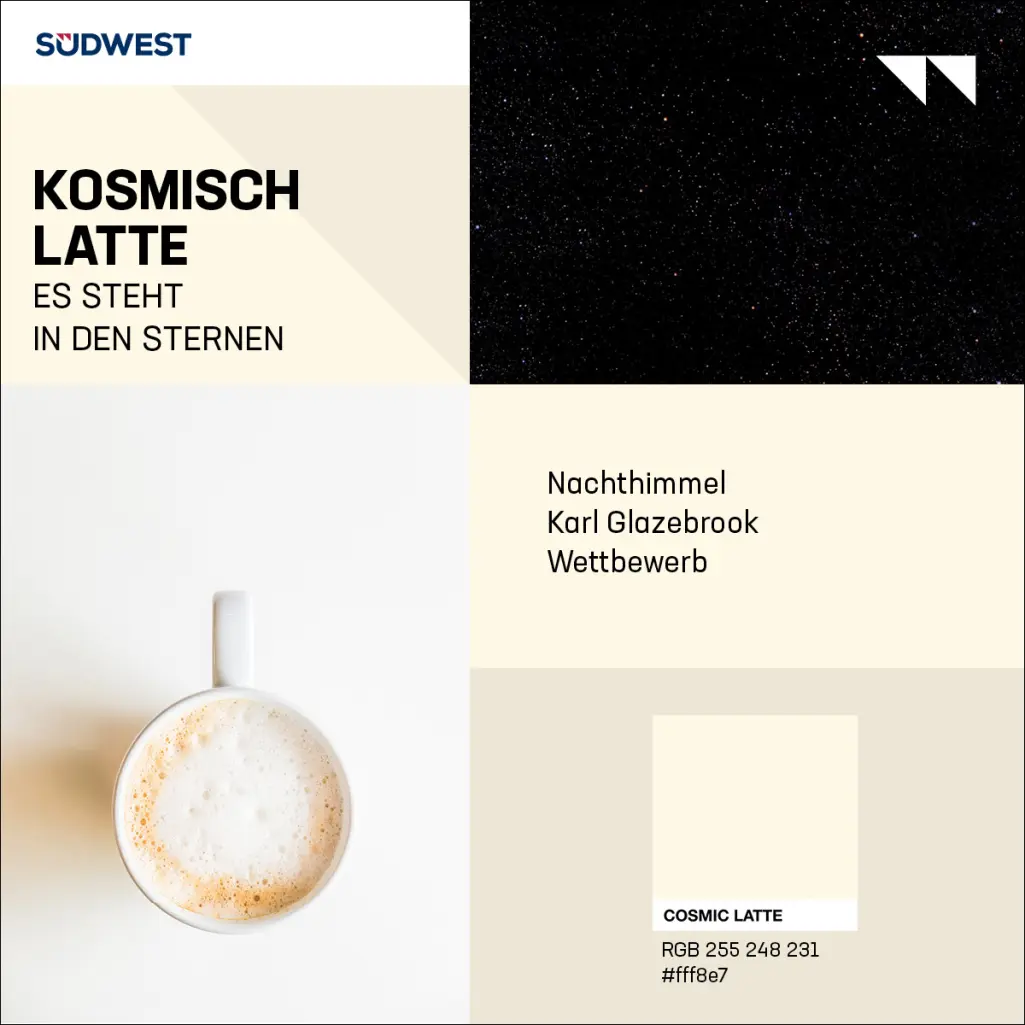
Fun Fact: Zu verdanken haben wir alles dem Forscher Karl Glazebrook. Er fand den Beige-Ton derart langweilig, dass er einen Wettbewerb zur Namensfindung ins Leben rief. Und da er leidenschaftlicher Kaffeetrinker war und der helle Beigeton dem Milchschaum ähnelt, gewann letztendlich der Vorschlag Cosmic Latte (Kosmisch Latte).
Rosso Corsa
Das Rot der Italiener
Die charakteristisch rote Farbe der Ferrari-Autos hat ihren Ursprung im Gordon Bennett Cup (1900-1905). Zu dieser Zeit existierte die Marke Ferrari zwar noch nicht, es wurden jedoch den Rennwagen Länderfarben zugewiesen. Rot wurde anfangs allerdings den Amerikanern zugesprochen, was sich erst 1920 änderte, als amerikanische Rennwagen zu einer blau-weißen Farbgebung wechselten und den Italienern das Rot überlassen wurde.
Bei der Gründung der Marke Ferrari hatte Enzo Ferrari ursprünglich den Farbton „Giallo Modena“ im Sinn, da diese Farbe im Wappen seiner Heimatstadt Modena sehr präsent ist. Allerdings merkte er schnell, dass die Kunden, welche seine Straßenautos kauften, das Rot seiner Rennwagen als Lackierung vorzogen. Die Farbe Rot und im Speziellen „Rosso Corsa“ setzte sich also durch.
Anfang der 90er Jahre waren ca. 85 % aller verkauften Ferrari-Modelle rot. Der Fußballgott Diego Maradona wollte seinen Ferrari F40 in schwarz ausgeliefert haben, was Enzo Ferrari jedoch persönlich verhinderte.
Heute bietet Ferrari eine Vielzahl an Rottönen, wie beispielsweise Rosso Scuderia, Rosso Mugello oder Rosso Fiorano an. Die Farbe Giallo Modena erfreut mittlerweile bei Sammlern der Marke großer Beliebtheit.
Fest steht, kein anderer Automobilhersteller hat seine Identität so stark mit einer Farbe verknüpft wie Ferrari.
„Wenn sie ein Kind bitten, ein Auto zu zeichnen, wird es ziemlich sicher rot sein.“
Enzo Ferrari

Tiger Orange
Ich sehe was, was du nicht siehst
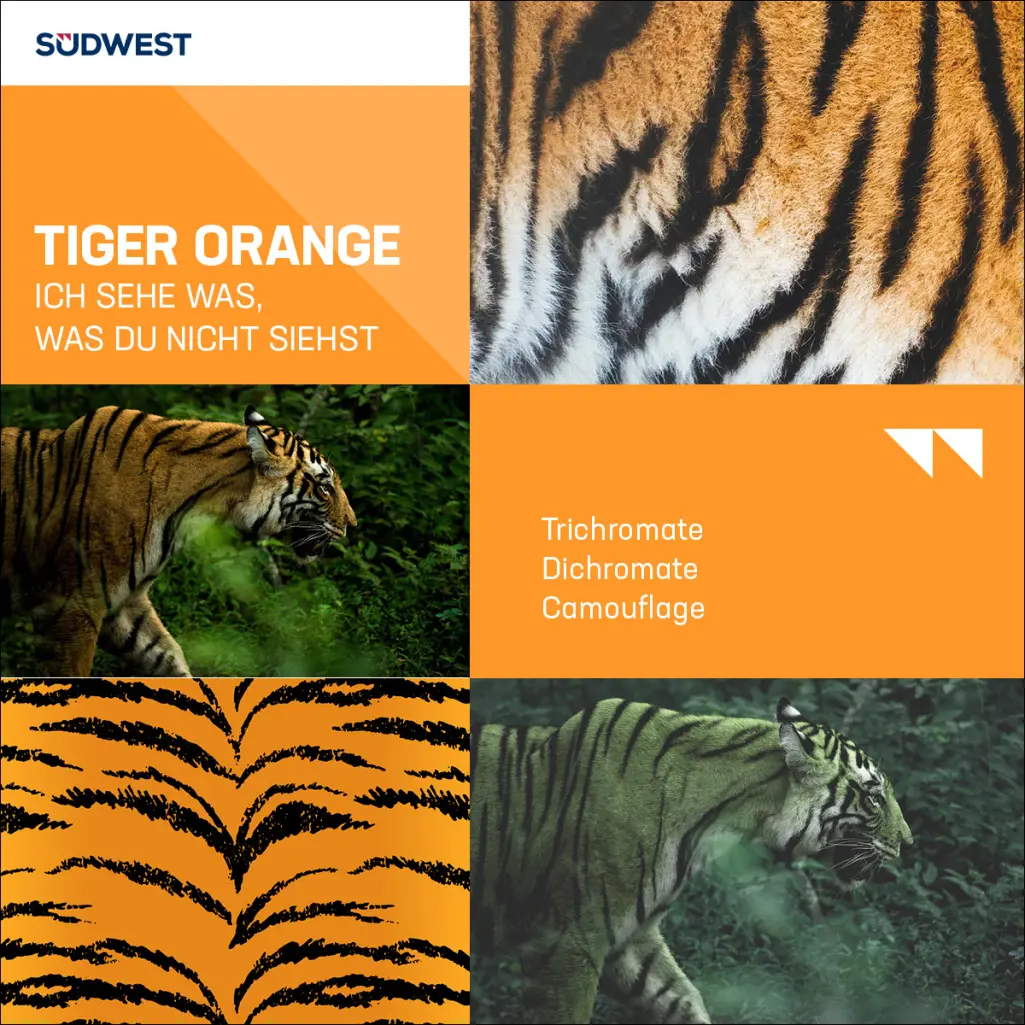
Tiger sind in der freien Wildbahn trotz ihrer auffälligen orangenen Farbe erstaunlich gut getarnt. Dieses Phänomen basiert auf den unterschiedlichen Sehfähigkeiten von Beutetieren und den Prinzipien der Farbwahrnehmung bei Dichromaten und Trichromaten.
Die meisten Beutetiere von Tigern, wie Hirsche und Wildschweine, sind Dichromaten. Das bedeutet, dass sie nur zwei Arten von Farbrezeptoren in ihren Augen haben, im Gegensatz zu Trichromaten, wie Menschen, die drei Arten von Farbrezeptoren besitzen. Dichromaten sind in der Regel weniger empfindlich für Rot- und Grüntöne, was dazu führt, dass sie Farben im roten Spektrum, wie das Orange eines Tigers, weniger intensiv wahrnehmen. Für diese Tiere erscheint das Orange des Tigers eher wie ein gedämpftes Grün oder Braun, das gut mit der Umgebung aus Gras, Laub und Schatten verschmilzt.
Trichromaten, wie Menschen, können drei Farben – Rot, Grün und Blau – deutlich unterscheiden. Für uns erscheint das Fell eines Tigers daher in leuchtendem Orange mit schwarzen Streifen.
Zusätzlich zu der farblichen Tarnung hilft das Streifenmuster des Tigers dabei seine Konturen zu verwischen. In der natürlichen Umgebung eines Tigers, die aus dichtem Unterholz, hohem Gras und wechselndem Licht besteht, brechen die Streifen das Körperprofil auf und machen den Tiger schwerer zu erkennen. Die Kombination aus der angepassten Farbwahrnehmung der Beutetiere und dem effektiven Tarnmuster macht den Tiger trotz seines für uns orangefarbenen Fells zu einem der besten Jäger des Planeten.